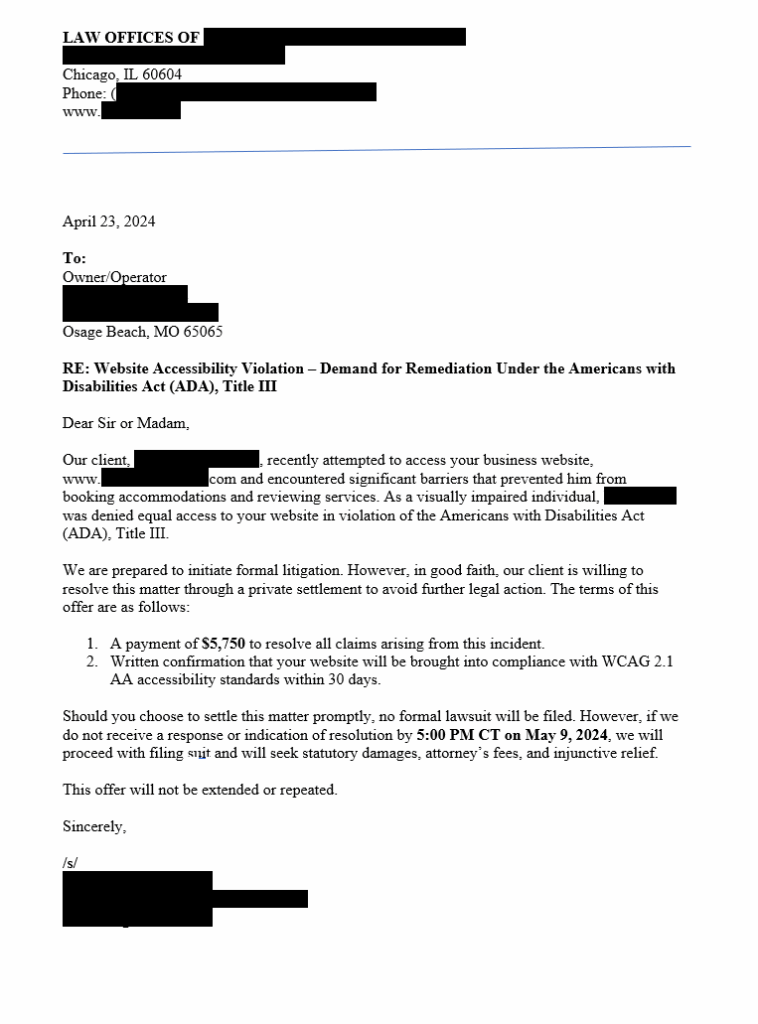
Privacy lawsuits aren’t about privacy anymore — they’re about easy money. If your website collects data and isn’t compliant, you’re next. This is a cash grab disguised as consumer protection, and lawyers are cashing in on technicalities.
If your business has a website, you’re already tangled in a mess of state and federal rules — many from places you may have never even been. ADA. Privacy laws. Cookie banners. Consent forms. Doesn’t matter if you’re a multi-million-dollar resort or a two-person dock service — you’re fair game.
These aren’t empty threats. ADA settlements start around $10K–$25K. Get hit again? You’re staring down $50K+. And they won’t call first. You’ll get a demand letter with a deadline. It’s legal extortion, plain and simple.
Your site is being scanned 24/7. Not by customers — by bots and lawyers looking to make money. If your site isn’t compliant, they will find it. And they’ll get paid.
This isn’t a maybe. It’s happening right now. The only decision you have is whether to handle it on your terms — or theirs.
Missouri’s working on its own privacy laws, but don’t think that protects you. If someone with a disability gets blocked from accessing their vacation plans — or someone from a stricter state — visits your site and you collect anything (even just a name or email), their laws can apply. It doesn’t matter if you knew, didn’t mean to, or never asked them to visit. You’re still on the hook.
What You Should Actually Care About
Two areas are tripping up most small businesses:
1. Privacy Laws
States like California and Illinois require clear privacy policies, cookie consent banners, and opt-ins before tracking visitors. If you collect names, emails, or run analytics, you’re already involved.
2. Accessibility (ADA Compliance)
The ADA now covers websites. Your site has to work for people with disabilities — screen readers, keyboard navigation, readable content. Lawsuits have already hit Missouri businesses.
Is This Really a Thing?
Yes. In 2024 alone, 3,000+ ADA website lawsuits were filed. That doesn’t count the thousands of demand letters quietly settled. A small handful of law firms are filing hundreds of cases each using cookie-cutter tactics.
According to EcomBack, just 15 law firms filed 86% of all cases. This is a business model.
Stuff You Can Fix This Week
- No privacy policy (or one you swiped from a random site in 2017)
- No cookie banner
- Contact forms with no disclaimers
- No accessibility audit or tools in place
- No idea what your website even does in the background
Final Thought
I’m not a lawyer. I’m a Certified Ethical Hacker based here at the lake. I built tools to quickly flag the stuff these lawyers and bots look for. I don’t bill for advice. I’m building my business by helping local businesses protect theirs.
This doesn’t have to cost much. Even basic fixes and effort can keep you off the radar. Trolls don’t go after sites that look like someone’s paying attention.
If you’ve never reviewed what your site collects, tracks, or exposes — it’s time.